CONNECTING for Lung Health
CancerCare has partnered with LUNGevity, University of Illinois and Mount Sinai Healthcare Systems to launch a new pilot program called CONNECTING for Lung Health to encourage the use of low-dose computed tomography (LDCT) screenings among people at high risk of lung cancer.
View all of the resources we've developed below.

Booklets
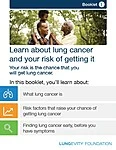
Learn about lung cancer and your risk of getting it
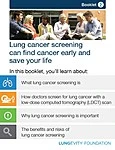
Lung cancer screening can find cancer early and save your life
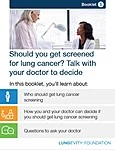
Should you get screened for lung cancer? Talk with your doctor to decide
Lung cancer screening and health insurance: Know what insurance will cover
Prepare for your lung cancer screening: What to expect during a low-dose computed tomography (LDCT) scan
After your lung cancer screening: Understand your low-dose computed tomography (LDCT) scan results and next steps
Fact Sheets
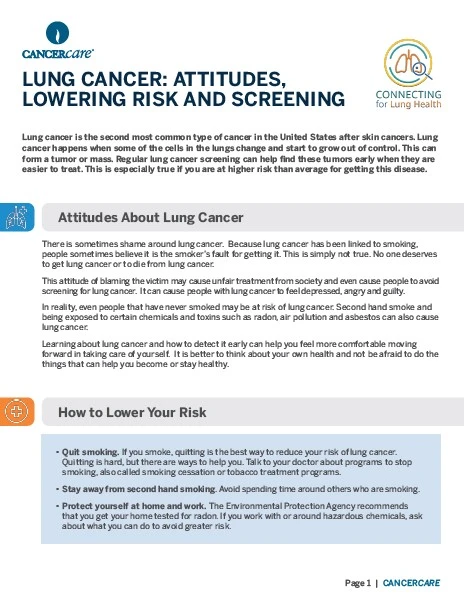
Lung cancer: attitudes, lowering risk and screening
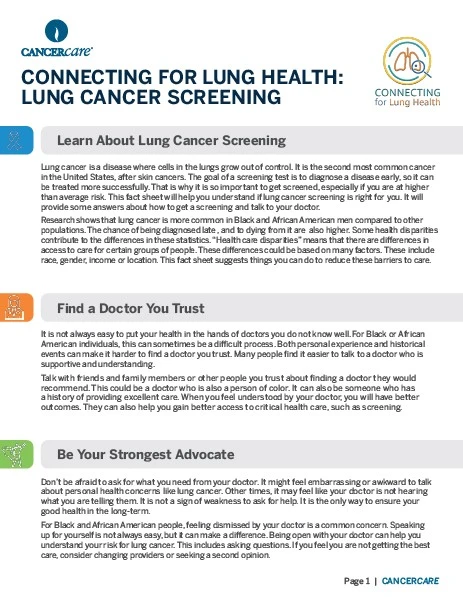
Connecting for lung health: lung cancer screening
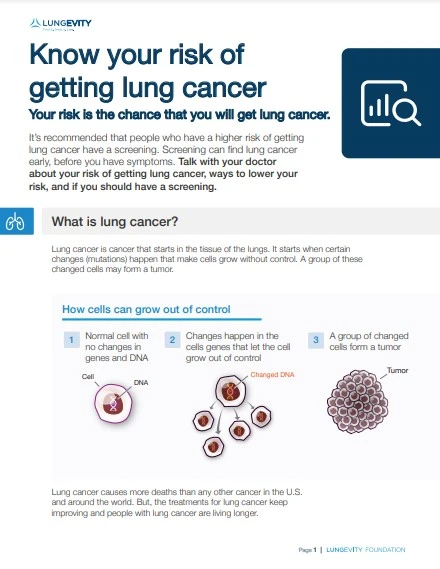
Know your risk of getting lung cancer
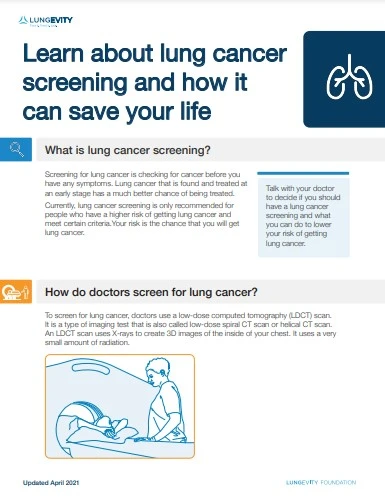
Learn about lung cancer screening and how it can save your life
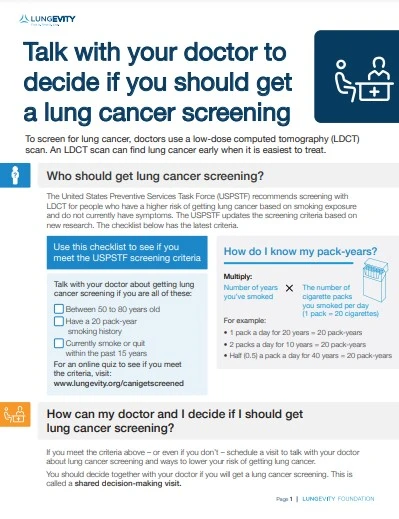
Talk with your doctor to decide if you should get a lung cancer screening
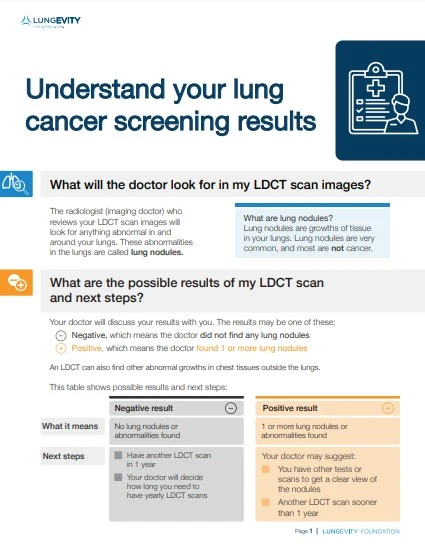
Understand your lung cancer screening results
Where to Get Screened
Lung Cancer Screening Programs
Chicago, IL
University of Illinois Lung Cancer Screening Program
Early screening leads to a higher chance of finding cancer in its early stages. If found early, there are more treatment options for lung cancer, and survival rates are greatly improved.
Eligibility and Risk Assessment
- 50-80 years old
- 20 pack-year smoking history or more (20 pack-years is equal to smoking one pack of cigarettes a day for 20 years, or two packs a day for 10 years)
- A current smoker, or a person who quit smoking less than 15 years ago
New York, NY
Mount Sinai Healthcare Systems Lung Cancer Screening Program
No cost screening is available at any location in the Mount Sinai Healthcare Systems.
Eligibility and Risk Assessment
- 50 to 80 years old and
- currently smokes or has quit in the past 15 years and
- has at least a 20 pack year smoking history (1 pack year = smoking a pack a day for a year or 2 packs a day for 10 years)
Metrocards will be provided for transportation to screening. Call Mount Sinai Health Educators at 212-824-7802
National